Chaco Reminiscences is an international project born out of the desire of the Wichí, Qom, Pilagá and Nivaclé peoples to share within their communities photographs taken a century ago by European anthropologists and missionaries. This Project, planned for June 2027, is supported by indigenous organisations, institutions and numerous prominent Argentine, European and North American personalities.
The Gran Chaco is a vast semi-arid area covering north-central Argentina, western Paraguay and south-western Bolivia. Traditionally inhabited by numerous semi-nomadic hunter-fisher-gatherer peoples, these lands, which were ‘colonised’ in the early 20th century, also attracted anthropologists and missionarie
Following in the footsteps of his mentor, the Swede Erland Nordenskjöld, and following the first Anglican missions, anthropologist Alfred Métraux developed a passion for the peoples of the Gran Chaco at an early age. These early European contacts with populations whose lifestyles and cultures were still relatively unspoilt resulted in a rich and little-known photographic heritage, now preserved in various European museums and institutions, including the Museum of World Cultures in Gothenburg, the Quai Branly Museum in Paris and the Cambridge Centre for Christianity Worldwide.
Upon his arrival in the Gran Chaco, Alfred Métraux lamented the negative impact of "civilisation": destruction of the environment, disease, and acculturation. He believed he was witnessing the death throes of these small civilisations. But these peoples did not disappear. Settled in a small portion of their ancestral lands or on the outskirts of large cities, they have managed to preserve their languages, cultures and a fierce determination to exist within contemporary Argentine society.
Following in the footsteps of his mentor, the Swede Erland Nordenskjöld, and following the first Anglican missions, anthropologist Alfred Métraux developed a passion for the peoples of the Gran Chaco at an early age. These early European contacts with populations whose lifestyles and cultures were still relatively unspoilt resulted in a rich and little-known photographic heritage, now preserved in various European museums and institutions, including the Museum of World Cultures in Gothenburg, the Quai Branly Museum in Paris and the Cambridge Centre for Christianity Worldwide.
Upon his arrival in the Gran Chaco, Alfred Métraux lamented the negative impact of "civilisation": destruction of the environment, disease, and acculturation. He believed he was witnessing the death throes of these small civilisations. But these peoples did not disappear. Settled in a small portion of their ancestral lands or on the outskirts of large cities, they have managed to preserve their languages, cultures and a fierce determination to exist within contemporary Argentine society.
The birth
Invited by the French NGO La Croix du Sud, Oscar Talero, leader of the Qom Qadhuoqté community, visited the Quai Branly Museum in 2023 and discovered Alfred Métraux's extensive photographic collection documenting the peoples of the Gran Chaco. Impressed by these century-old photos, he immediately thought that sharing them today with the communities concerned could support their ongoing work to preserve their memory. He asked La Croix du Sud to initiate a project along these lines. This is how Chaco Reminiscences came about.
Meeting on 09/27/2023 with from left to right, Alain Lenud, Lucia Dri, Paz Nuñez Regueiro, Leandro Varison, Oscar Talero and Clément Tourgeron.
Description du projet
We can only live fully and freely in the present when we understand the past. The peoples of the Gran Chaco have passed down their memories orally for thousands of years, but since the beginning of the 21st century, these memories have been severely altered by acculturation. The official history, written from a “colonial” perspective, is often unfavourable to them, while ethnographic writings remain inaccessible due to the cultural divide. By widely disseminating this little-known photographic heritage, buried memories may be revived and can enrich the soil in which individual and collective memories of the present can take root.
The project aims to project these photos in front of each community to elicit reactions and to encourage people to come forward to work in small groups on contextualising them. In concrete terms, the Chaco Reminiscences project is made up of several teams: a humanitarian team, a scientific team, an artistic team and a documentary team. The teams will spend three to four days at several sites selected by community leaders between Salta and Las Lomitas. At the end of the stay at each site, a sample of photos will be left at the disposal of the communities, and financial assistance provided to help support a small ‘community museum’ in each location, or to create one, where they do not already exist.
Reminiscences of the Chaco, a cultural project with a scientific and artistic focus, will take place in June 2027 in close consultation with the communities concerned, from Mision Chaqueña to Las Lomitas, via Santa Victoria Este, El Potrillo, Laguna Yema, La Rinconada and Guadalcazar, within the Wichí, Pilagá, Qom and Nivaclé communities. It will include the production of a documentary and, possibly a book and an exhibition focusing on these encounters and photos.
Reminiscences of the Chaco, a cultural project with a scientific and artistic focus, will take place in June 2027 in close consultation with the communities concerned, from Mision Chaqueña to Las Lomitas, via Santa Victoria Este, El Potrillo, Laguna Yema, La Rinconada and Guadalcazar, within the Wichí, Pilagá, Qom and Nivaclé communities. It will include the production of a documentary and, possibly a book and an exhibition focusing on these encounters and photos.
Indigenous organisations:
Lhaka Honhat (Our Land)
Indigenous association predominantly made up of Wichí people from the Santa Victoria Este region (province of Salta). Led by Cristina Perez, the association brings together 132 Wichí, Chorote, Chulupi, Qom and Tapieté communities. Since 1991, it has been fighting for undivided ownership of 643,000 hectares of ancestral indigenous lands. In 2020, it won its case before the Inter-American Court of Human Rights, which granted it rights to 400,000 hectares, which the Argentine authorities have still not recognised.
The Pilagá Federation
She brings together all the Pilagá communities in Argentina. It was formed to seek recognition of the 1947 Rincón Bomba massacre, which claimed nearly a thousand victims, as genocide. It is using this recognition, obtained in 2020, to defend the Pilagá people and their culture.
The Organisation of Nivaclé Communities
She brings together the Nivaclé communities of Argentina who are fighting to be recognised as pre-existing to the National State. Until 2025, the Nivaclé people were not recognised in Argentina, and were considered recent immigrants from Paraguay. This decision grants them legal existence, the right to claim land, and recognition of their language and culture.
Indigenous communities:
Mision Chaqueña
(Province of Salta)
First Anglican Wichí mission.
First Anglican Wichí mission.
Santa Victoria Este and Mision la Paz
(Province of Salta)
Multi-ethnic communities predominantly Wichí on the banks of the Pilcomayo River.
Multi-ethnic communities predominantly Wichí on the banks of the Pilcomayo River.
El Potrillo
(Formosa Province)
Wichí community originating from the former San Andrés and El Yuto missions.
Wichí community originating from the former San Andrés and El Yuto missions.
Sombrero Negro
(Formosa Province)
Qom community originating from the former El Toba mission.
Qom community originating from the former El Toba mission.
Laguna Yema
(Formosa Province)
Nivaclé community.
Nivaclé community.
Guadalcazar
(Formosa Province)
Pilagá and Nivaclé communities originating from the former Pilaga Mission.
Pilagá and Nivaclé communities originating from the former Pilaga Mission.
Las Lomitas
(Formosa Province)
Pilagá and Wichí communities.
Pilagá and Wichí communities.
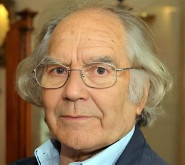
Adolfo Perez Esquivel
1985 Nobel Peace Prize winner, painter, Honorary President and founder of SERPAJ (Servicio Paz y Justicia).
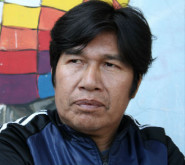
Oscar Talero
Leader of the Qom Qadhuoqté community in Rosario, activist for indigenous causes and initiator of the project.

Daniel Metraux
Son of Alfred Métraux, Doctor of Philosophy from Columbia University, Professor Emeritus of Asian Studies at Mary Baldwin University (Virginia, USA)
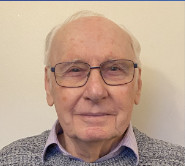
David Leake
Born and raised in the Chaco, Anglican missionary, former bishop of Argentina and son of Alfred Leake (Founder of several missions in the Chaco)
Institutions:
Academy of Sciences of Buenos Aires
SERPAJ (Servicio Paz y Justicia)
The Anglican Church of Argentina
The Museum of World Cultures
Church Mission Society
APCD (Association for the Promotion of Culture and Development)
Notable Supporters:
Guy Métraux
Son of Guy Métraux, brother of Alfred, Professor Emeritus, York University (Canada)
Cristina Perez
Representative of Lhaka Honhat, an association of 132 indigenous communities in the Santa Victoria Este area (Salta).
Tiburcio Flores
Leader of the Wichí community in Misión Chaqueña
Juliana Lungui Tisjucat
Representative of the Organization of Nivaclé Communities
Noole Palomo
Representative of the Pilagá Federation, which brings together all the Pilagá communities in Argentina.
Felix Diaz
representative of the Qom people of Formosa Province, President of the Consultative and Participatory Council of Indigenous Peoples of Argentina.
Philippe Descola
Anthropologist, Americanist, lecturer at the École des Hautes Études en Sciences Sociales (EHESS) and member of the Collège de France.
Brian Williams
Bishop of the Anglican Church of Argentina.
Cristobal Wallis
Anthropologist and linguist, specialist in the Wichí people.
Lorena Cordoba
Anthropologist, researcher at CONICET, specialist in Alfred Métraux.
Diego Villar
Anthropologist, researcher at CONICET, specialist in the Chaco.
Adriana Muñoz
Doctor of Philosophy, Assistant Professor at the University of Gothenburg, Curator for Latin America at the National Museums of World Cultures in Gothenburg.
Cecilia Paula Gómez
Anthropologist, researcher at CONICET, specialist in the cosmovision and cultural astronomy of the peoples of the central Chaco.
The project coordination team:
Alain Lenud
French-Senegalese retiree, co-founder and president of La Croix du Sud.
Rosa Gutierrez-Silva
Argentine, health executive and epidemiologist, co-founder of La Croix du Sud.
Lucia Dri
Argentina, doctor, local correspondent for La Croix du Sud in the province of Formosa.
Richard Kent
British, structural engineer and member of La Croix du Sud.
Valentina Veronese
Argentine, co-head of field logistics.
The scientific team:
José Braunstein
Argentine anthropologist, internationally recognised specialist in the peoples of the Gran Chaco, who lived for many years in Las Lomitas (Formosa Province). He is a member of CONICET (National Scientific and Technical Research Council of Argentina) and the Academy of Sciences of Buenos Aires.
Anne Gustavsson
Swedish anthropologist specialising in the Pilagá peoples, as well as visual heritage and memory processes in the Gran Chaco. She teaches at the Institute of Advanced Social Studies at the National University of San Martin in Buenos Aires (Argentina) and is an associate researcher at the Department of Cultural and Media Studies at the University of Umeå (Sweden).
Rodrigo Montani
Anthropologist and researcher at the Institute of Anthropology at the National University of Cordoba, member of CONICET (National Council for Scientific and Technical Research in Argentina). He is a specialist in Wichí culture and linguistics and is fluent in the language.
Marco Flamini
Doctor of Biology from the University of Córdoba (Argentina), specialising in ethnobiology, with extensive knowledge of the Chaco region and in particular the Wichí area.
Alberto Preci
Senior Lecturer in Geography at the Faculty of Geography and Planning at Sorbonne University, specialising in the Gran Chaco and the Brazilian Sertao.
Joice Barbosa Becerra
PhD candidate in social anthropology at the University of Buenos Aires and specialist in the Nivaclé people.
Emile Gabbardo
PhD student in the Territories, Migrations and Development (TMD) program at EHESS.
The Scientific Project:
Planning, discussing, developing, and implementing methodologies to return visual ethnographic archives to their places and communities of origin.
1) Recording and evaluating the reception of the selected photographic corpus in the communities where they are presented. This includes analysing the following points:
-Discussing and identifying with community members the material culture, cultural, social and economic practices, people, time and space represented in the images.
-Describing, analysing and interpreting current interpretations and appropriations of the cultural, social and economic practices of the past represented in the images.
Describing, analysing and interpreting differences and similarities in ways of remembering based on generational affiliation, professional or occupational background, and religious and gender affiliations.
2) Analysing the reception of images in the context of social life, including their production and circulation.
1) Recording and evaluating the reception of the selected photographic corpus in the communities where they are presented. This includes analysing the following points:
-Discussing and identifying with community members the material culture, cultural, social and economic practices, people, time and space represented in the images.
-Describing, analysing and interpreting current interpretations and appropriations of the cultural, social and economic practices of the past represented in the images.
Describing, analysing and interpreting differences and similarities in ways of remembering based on generational affiliation, professional or occupational background, and religious and gender affiliations.
2) Analysing the reception of images in the context of social life, including their production and circulation.
The artistic team and project:
Etienne Bernardot
Hybrid and transdisciplinary artist. Coming from the VJ scene of the late 1990s, he works with digital tools for choreographed performances, theatre, concerts and installations. Over the past 15 years, he has created his own semi-digital, semi-analogue creative tools in search of new forms of expression. He sees creation as a genuine means of exchange, which has led him to participate in numerous international projects in recent years.
Ilia Gilbertas
Trained at leading classical dance schools and began her career in 2006 with international companies. She then became a choreographer, trained in lighting design, made experimental films, and learned contortion and acrobatics. Ilia Gilbertas is a multidisciplinary artist.
Văn TTX
Writer and poet. At the age of just 20, his first poems were published by Éditions Parole d'Aube. He worked in Prague as a French reader, lived in Northern Ireland and Chile, and then settled in Paris, where he worked as a proofreader and editor for the lyric guides for the Universal music label, singer in an obscure band, and night watchman. He founded a creative writing workshop and a publishing house in Brussels while continuing his eclectic and unique work.
Artistic project
Substrat is a project created by three artists: Étienne Bernardot (video, photography, and digital artist), Ilia Gilbertas (dancer, choreographer, and videographer), and Văn TTX (writer, poet, and lyricist). It comprises several components:
– ephemeral performances (combining music, video projection, and dance) created jointly by Francophone and/or Indigenous artists and members of local communities wishing to participate, particularly younger generations. Substrat involves real-time video creation using both digital and analog tools, as well as a dance practice that incorporates video as a partner. The visual creation process begins by pairing photographs taken by ethnologists and missionaries with contemporary photos taken by local residents.
– a blog, launched prior to the project itself, featuring articles, videos, and personal accounts.
– a multimedia installation (incorporating poems, photographs, and films) that reflects the human, artistic, and cultural exchanges that took place during the creation of the performances. The installation’s central theme is to showcase the present-day reality of the Wichí, Qom, Pilagá, and Nivaclé peoples.
– ephemeral performances (combining music, video projection, and dance) created jointly by Francophone and/or Indigenous artists and members of local communities wishing to participate, particularly younger generations. Substrat involves real-time video creation using both digital and analog tools, as well as a dance practice that incorporates video as a partner. The visual creation process begins by pairing photographs taken by ethnologists and missionaries with contemporary photos taken by local residents.
– a blog, launched prior to the project itself, featuring articles, videos, and personal accounts.
– a multimedia installation (incorporating poems, photographs, and films) that reflects the human, artistic, and cultural exchanges that took place during the creation of the performances. The installation’s central theme is to showcase the present-day reality of the Wichí, Qom, Pilagá, and Nivaclé peoples.
The documentary team and project:
Edouard Jacques
Author, director and director of photography, has been working for French television for over 22 years. Initially working as a cameraman for studio and magazine programmes, he quickly moved into historical, heritage and archaeological documentaries as director of photography, then as author and director. He has also gained a wide range of experience in social reporting and in-depth investigations.
Project management and organization
Project funding
Contact the communities
NGO La Croix du Sud
Project support structure for Reminiscences of the Chaco
https://www.lacroixdusud.eu
lacruzdelsur@wanadoo.fr
https://www.lacroixdusud.eu
lacruzdelsur@wanadoo.fr
ILIAEB Company